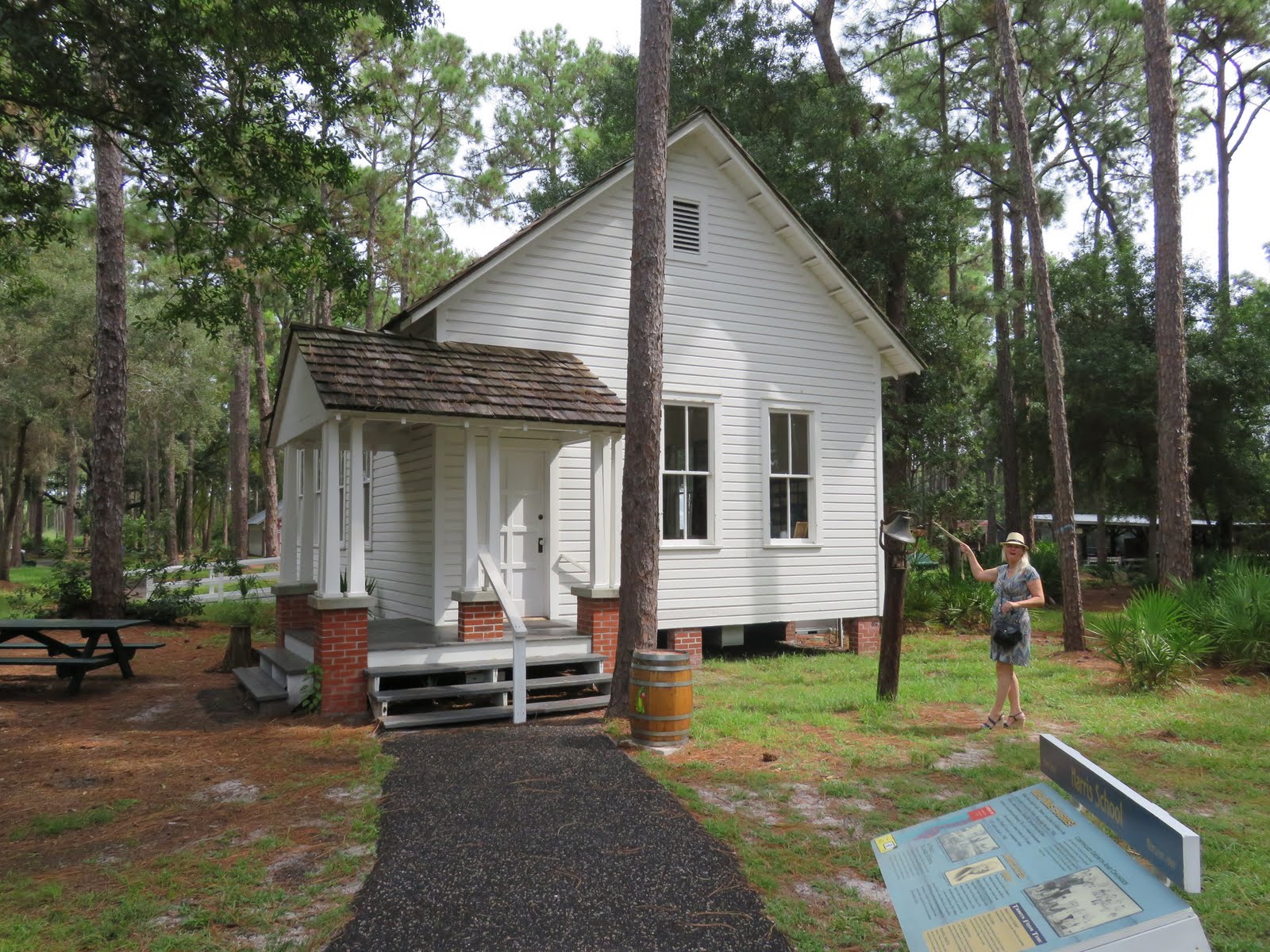
There
was one attraction in the Tampa area that we’d visited a couple of times before. We’d enjoyed it so much we wanted to experience it one more time!
This is
the entrance to Big Cat Rescue… One surprise to first time visitors is that
this enclave for big cats occupies 67 acres in an urban area of Tampa with a
shopping center, offices and homes located nearby. Access to Big Cat Rescue is down a rough dirt
and gravel road which is right off a busy multi-lane city street.
This
organization, which is one of the world’s largest accredited sanctuaries for
exotic cats, is a leading advocate in ending the abuse of captive big cats and
saving wild cats from extinction. The
facility is home to about 80 Lions, Tigers, Leopards, Bobcats, Cougars, Servals
and other species, most of whom have been abandoned, abused, orphaned, saved
from being turned into fur coats, or retired from performing acts. The sanctuary began rescuing exotic cats back
in 1992.
The
only way to visit Big Cat Rescue is to go on a tour. The schedule is limited but several different
types of tours are available. The most
common tour cost $36.00 per person.
However, our schedule was a bit tight and we had to choose the Feeding
Tour ($65.00 each) or skip it all together… We made the right choice!
These
were our guides during our tour. The
woman on the left was our actual tour guide and the woman on the right was the
animal keeper who was responsible for feeding the cats. We were fortunate that our group was fairly
small. It was relatively early in the
morning and we avoided the most oppressive heat of this early September day…
Note: To keep stray and/or stupid visitors out
of trouble, the tour guide led the way and the keeper kept us together at the
back of the pack… The enclosures used
for these cats are secure but they aren’t separated from visitors like those in
a zoo.
This
is the food for the cats we would see fed on our tour. Some of the big cats are on a special diet,
others only eat chicken and some have much of their food chopped up due to a
loss of teeth over the years. Since
there are over 80 cats at Big Cat Rescue, our one hour plus feeding tour only
involved about 9 or 10 cats.
Our
first big cat on the tour was this beautiful tiger. He rumbled and grunted as the keeper
approached with the food. Each enclosure
has an adjoining small caged area that is used for feeding. The cats learn that this is the food and
water spot in their world and it’s easier to control the process in this more
confined area.
Several
of the cats were feed a ground meat mixture which was supplemented with chunks
of raw meat offered to them on a stick. The
keeper was very cautious but she was quite close to these big cats…
The
Tiger is the largest cat species, reaching a total body length of up to 11.1
feet and at its extreme weighing up to 857 pounds in the wild. There are or were 9 subspecies of Tigers in
recent historic times. Bali, Caspian and
Javan Tigers are already extinct.
Bengal, Indochinese, Malayan, Siberian, South China and Sumatran
varieties still exist. The most “common”
subspecies is the Bengal…with less than 3,000 remaining in the wild. The most critically endangered subspecies is
the South China Tiger. None have been
spotted in the wild in over 25 years and only 65 remain in captivity.
This is
a Serval… The Serval is a medium-sized African wild cat native to sub-Saharan
Africa. These are medium-sized cats, with
a shoulder height of between 21 to 26 inches and weighing from 15 to 26 pounds in
females, and from 20 to 40 pounds in males.
The Serval is considered common and it’s widely distributed throughout
much of Africa, although it prefers savannahs and forest fringes.
I believe that this is
a Lynx- Bobcat mix… There were a number of cats at Big Cat Rescue that
are the result of interbreeding by ‘pet owners’.
Bobcats
are of course a North American wild cat.
They range from southern Canada to central Mexico, including most of the
continental United States. This adaptable
predator inhabits wooded areas, as well as semi-desert, urban edge, forest
edges, and swampland environments. They
are about twice the size of a domestic cat with big male Bobcats weighing in at
as much as 40 pounds.
This
beautiful cougar is almost totally blind.
She knows her keepers voice and her own name. She was very sweet but she’s also very
large. Her food had to be almost handed
to her…and she took it like a lady.
There
was a documented Cougar sighting in East Tennessee in August near the Kentucky
border. It was the first documented
sighting of a cougar in Tennessee in 100 years.
There is no doubt however that this big cat, (weighing up to 140 pounds
for a female and 200 pounds for a male), is making a comeback across the USA.
The Cougar
has the largest range of any wild land animal in the Americas. Its range spans
110 degrees of latitude, from northern Yukon in Canada to the southern Andes.
Its wide distribution stems from its adaptability to virtually every habitat
type. It is found in all forest types,
as well as in lowland and mountainous deserts. The Cougar prefers regions with dense underbrush,
but it can live with little vegetation in open areas.
Big Cat
Rescue has several leopards on their premises.
They are truly strong and handsome cats!
Females can weigh up to approximately 130 pounds and males can reach 200
pounds.
Leopards
live across a wide range in regions of sub-Saharan Africa, West Asia, the
Middle East, South and Southeast Asia to Siberia. The leopard's success in the wild has been due
to its well camouflaged fur, its opportunistic hunting behavior, broad diet,
and strength to move heavy carcasses into trees. They have adapted to various habitats ranging
from rainforest to steppe and including arid and montane areas. Because of habitat loss and pest control
efforts, they are now listed as “Near Threatened” across their range…
The
keeper had to be a bit cagey when she fed this Jaguar. She would distract her with one hand and toss
the food in with the other.
The
jaguar is the third-largest feline after the tiger and the lion, and the
largest in the Americas. The jaguar's
present range extends from Southwestern United States and Mexico across much of
Central America and south to Paraguay and northern Argentina. Apart from a known and possibly breeding
population in southeast Arizona and the boot heel of New Mexico, the cat has
largely been extirpated from the United States since the early 20th century.
This is
a near-threatened species with loss of habitat being its biggest problem. A large male may weigh as much as 340 pounds
but the smallest females may only weigh about 80 pounds. The Jaguar is an opportunistic hunter and its
diet encompasses at least 87 species.
This dietary variety is necessary due to the fact that much of this big
cat’s range lacks larger ungulates such as deer and antelope.
This
beautiful cat is a Caracal. The Caracal
is a medium-sized wild cat that is around 3 foot 4 inches long and they can
weigh up to between 35 and 40 pounds. The
Caracal is native to Africa, Central Asia, Southwest Asia and India. The cat's name comes from the Turkish word
"karakulak", which means "black ear". They are great hunters and they can take down
prey that is 2 to 3 times their size. This
cat is widely distributed across Africa, the Middle East, and Southwest Asia
into India.
We
didn’t feed any lions on our tour but we did pass an enclosure where this big
lioness was resting. Every cat has
plenty of room and shade with lots of hiding spots if they feel like staying
out of view. Of course, unlike zoos, the
cats aren’t ogled all day long so they don’t seem to mind some attention from
visitors.
Lions
are the second largest big cat, only surpassed by the Tiger. Female Lions in the wild can weigh up to 280
pounds and a big male may weigh up to 550 pounds. Estimates vary widely but there may be only
about 20,000 Lions remaining in Africa and only about 523 remaining in
India.
The
sanctuary actually has a ‘vacation area’ that many of the cats are rotated
through. It’s a much larger enclosure
with lots to explore. One problem they
have with it is that some of the cats don’t want to return to their home
enclosures after going on vacation. We
all know how they feel!
This
big boy was just rolling around, rubbing the ground and making sweet little
noises. What a sweet cuddly Leopard!
Or
maybe not! We didn’t feed this leopard
but we did stop to watch his performance along with our guides and two other
keepers. The keepers stressed that they
can’t trust any of the cats and that this fellow likes the attention but he’d
snag a keeper or visitor in a second if he could…
What’s
with the tongue! I believe that this is
a Lynx or perhaps a Lynx mix.
The
Lynx is closely related to the Bobcat with the Bobcat being included in the
Lynx family. There are 3 species of Lynx
per se…the Eurasian, Iberian and Canadian.
Typically in the wild, Canadian
Lynx weigh between 18 and 24 pounds. (We had a big male housecat that weighed
26 pounds!) The Canadian Lynx is
endangered in the USA. The Eurasian Lynx
is designated as a National Animal in Macedonia and in Romania.
Some of
the cats at Big Cat Rescue are fairly shy but since most big cats, except
lions, are solitary creatures, that shouldn’t surprise anyone. This Ocelot looked very natural hiding among
the ferns…
Ocelots
are distributed throughout South America including the islands of Trinidad and
Margarita as well as Central America, and Mexico. It has been reported as far north as Texas and
southern Arizona. The ocelot is similar in
appearance to a domestic cat but its fur resembles that of a clouded leopard or
jaguar. Because of that fact, it was
once regarded as particularly valuable. As
a result, hundreds of thousands of ocelots were once killed for their fur. The Ocelot was classified as a vulnerable
species from 1972 until 1996 but now it is listed as being of least concern.
If you
love cats or just animals in general, Big Cat Rescue is a great place to
visit! This non-profit is a well-run
sanctuary and visitors help support its feline population. Big Cat Rescue is located at 12802 Easy Street
in Tampa Florida. Phone:
212-209-3370. Website: www.BigCatRescue.com. They also publish a quarterly newspaper, The
“Big Cat Times”, which can be delivered via the USPS or digitally. They are also on Twitter at
Twitter.com/BigCatRescue.
Just
click on any of the photos to enlarge them…
Thanks
for stopping by for a walk on the wild side!
Take
Care, Big Daddy Dave