Friday, September 15, 2023

Road Trip – Missouri (Part 6)

After our visit and thunderstorm/rain shortened visit to Baker Creek Seed Company and its Pioneer Village, we drove through nearby Mansfield Missouri before heading north.  I was going to check out the downtown area and I had a specific historic site I wanted to at least take a look at…

The old Mansfield Bank Building at 110 East Commercial Street was built in 1917.  I took the photo because it had that classic old time bank ‘look’, one that conveyed security and prosperity to depositors.  This is the main branch of HomePride Bank…and there are 4 other small town locations nearby.  This family owned bank was established in 1892 and it’s been serving the community for over 130 years now.  That’s quite impressive!

The site where Mansfield is built was purchased in 1881.  The town’s population has varied little over the past few decades.  As of 2020, it had about 1,200 residents.  Today it is known as the former hometown of author Laura Ingalls Wilder as well as the home of the Baker Creek Seed Company.


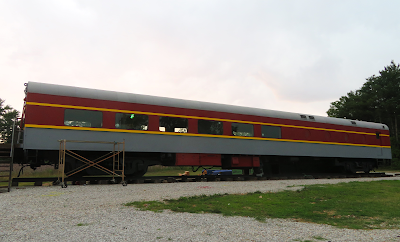
This old refurbished Frisco Railroad depot, with its ‘grounded’ passenger coach, apparently replaced at least one previous depot.  It currently serves as the home for the Mansfield Area Historical Society as well as a museum showcasing artifacts, photos and history of early settlers and their descendants as well as Laura Ingalls Wilder.  More will follow below as regards Laura Ingalls Wilder. 

I couldn’t determine just when this depot was originally built.  The older photo above is from the early 1950s.  The Historical Society is continuing to expand their collection in the museum…and from the look of the stairs going up to the passenger car, visitors may have access.  To learn more about this local group and the museum, go to Home - Mansfield Area Historical Society (mansfieldhistoricalmuseum.com).


I did find an old photo of the original railroad depot in Mansfield…or I should say, one of the two original depots in town. The railroad came to Mansfield in 1882.  Originally the town’s commercial district consisted of 10 blocks with two depots and their property as well as the railroad tracks running through the middle of the district.  The Kansas City, Ozark and Southern Railroad’s depot was on the south side of the tracks and the Frisco Railroad’s depot was on the north side.  Apparently, the Kansas City, Fort Scott and Memphis Railroad also served Mansfield at some point in time.

Mining companies were established in the area in the mid-1880s and by the 1890s Mansfield was growing fast.  Wooden sidewalks were even built. By 1914, the Mansfield Power and Light Company was organized and the ‘city came out of the dark’.  By 1920, Mansfield could boast of a population of 757 citizens!

What is the historical significance of this home in Mansfield with its blue window frames?  I don’t know if there is any…but we both loved the look of this house so Laurie took a picture of it!

I love bits of history like this about Mansfield that I borrowed from the Internet:

“…Mansfield is a town of about 750 people. It has a very picturesque location on the wooded hills, and is on the main line of the Kansas City, Fort Scott and Memphis R.R.  As this is the only road in this part of the state, an immense amount of business is transacted here. Nearly all kinds of businesses are represented here. Stock farming, and fruit culture the principle industry. There are good church and school privileges. The new school building, a fine brick structure stands on a mountain side and commands a fine view of the town and surrounding country. Three teachers are now employed and another department will be put in next year.” 


“The lead and zinc mines a mile from town employ about fifty men.

Land can be bought near the railroad for from five to twenty dollars per acre, according to improvement and location. Most farms have on them living springs where water flows out of solid rock, and afford water for both stock and house use. There is one spring about six miles from here running a good sized grist mill.”


Pictured above...the first photo...is the back of the Laura Ingalls Wilder Home and Museum on the outskirts of Mansfield Missouri.  I borrowed the photo of the front of the home from the museum's website.  If you live in the USA and are over 40 years old and you’ve never heard of Laura Ingalls Wilder or her series of children’s books, (read by many adults including both of us), either you live under a rock or you just don’t read much.  Another opportunity to know a bit about Wilder’s work would be to watch the popular old television series, “Little House on the Prairie”, which ran from 1974 until 1983.  That series was loosely based on her books.

Her 8 “Little House” books were published between 1932 and 1943, and they were based on her childhood growing up in a settler or pioneer family.  Laura Ingalls Wilder was born in 1867 and died in 1957.  Her daughter, Rose Wilder Lane, may have collaborated in the writing of some of the books. (FYI Rose, along with 2 other female writers, Ayn Rand and Isabel Paterson, was one of the most influential advocates of the American libertarian movement.

In any case, in 1894 Laura Ingalls Wilder, her husband, Almanzo and their daughter Rose moved to Mansfield from South Dakota.  Laura and her husband lived in this area for the next 60 years.  They established a large and successful poultry, dairy and fruit farm.  Today their unique 10-room farmhouse is a National Historic Landmark and a museum that attracts tens of thousands of tourists every year.

Unfortunately, this is about as close to the museum as we got… It was late, it was raining and we had to head north to our overnight destination ASAP.  To learn more about the museum, you can go to Home - Laura Ingalls Wilder Historic Home & Museum (lauraingallswilderhome.com).

FYI – Ken Osmond, “Eddie Haskell” on the TV series “Leave it to Beaver” was a neighbor of the Wilder family when he was a youth.

From Mansfield we headed due north along MO Hwy 5 to Lebanon Missouri for our overnight stop at the local Hampton Inn.  It was only about a 45 mile drive…but rain was falling.


Once we checked in to our hotel, it was time for dinner.  I’d picked a restaurant where we could have diner but they were closed…poor job of researching!

By now the rain was just gushing down in sheets and the wind was really blowing too.  The closest place to eat was the Brick House Grill less than a block from the hotel.  We got a break in the worst of the rain and headed over for dinner.

I didn’t take an outside photo due to the rain.  The interior photo above gives you an idea as to how busy Brick House Grill was on this inclement night.  Besides us, and those at the bar, there were only 2 other tables occupied.  Now onto the food.  Laurie wasn’t too hungry and she ordered a quesadilla.  I jumped out there and ordered their ‘prime’ steak, cooked medium rare.  For a side I ordered corn on the cob and the steak came with “Texas Toast”. 

It took a while for Laurie to get her food despite a lack of customers.  But, my food wasn’t served when hers was.  Time passed and Laurie was almost done eating when my steak arrived.  It was an interesting shape…and it had been grilled beyond medium rare or even medium.  It was like a dark chewy brick.  I ate a bit of it and the waitress stopped by and made the mistake of asking how my steak was.  I told her and then she disappeared.  Then another waitress came by and told me that the chef was grilling another steak for me. 

I told her that I didn’t need it but she said that they were giving it to me anyway and we could take it with us!  What?!  So I stopped hacking at the brick in front of me and the next steak was delivered with comments that they were having trouble with the grill… Things went downhill further when I cut into this piece of beef and it ‘mooed’ at me with a cool blood red center.  She took it back to the fire…and I’ll just stop the story here.  It was not a good experience but the rain had let up and I managed to have a good night’s sleep.  FYI, the Brick House Grill can be found at Brickhouse Grill | Lebanon MO | Facebook.  


The Munger-Moss Motel is a blast from the past.  This vintage ‘auto court’, that’s what they were called in the early days, was built in 1946.  Today it is one of the few remaining ‘mom and pop’ motels on former US Hwy 66, more commonly referred to now as Route 66.  It was a rainy day for us...

It all began with the construction of the Munger-Moss Sandwich Shop in Devil’s Elbow Missouri.  It was built in 1936 by Nellie Munger and her husband, Emmitt Moss.  The sandwich shop was famous for its barbeque and it was a well-known stop along Route 66.  When the highway was relocated during WWII in order to handle heavy military traffic to and from nearby Fort Leonard Wood, the business suffered. 

A new owner moved the business to Lebanon and built the motel.  War time rationing was still being enforced and the lumber used for construction of the motel may have been purchased via the black market.  The government tried to find the owner to stop the work…but he stayed hidden most of the time.  Originally, the units being rented were cabins but as demand grew, more units were needed and they were built in the space left between the original units. 

The motel has been owned and managed by the same couple since 1971.  Each room has a different theme.  To learn more, go to the motel’s website at Munger Moss Motel | Home

Back when Route 66, aka the ‘mother road, was the route that ran all the way from Chicago to Santa Monica California, Lebanon and many other towns along the highway were littered with motels.  Not all of them have fared as well as the Munger-Moss Motel, which is almost right across the street from this derelict motel.

US Hwy 66 was established on November 11, 1926.  It covered a total of 2,448 miles and ran through the states of Illinois, Missouri, Kansas, Oklahoma, Texas, New Mexico, Arizona and California.  At least in Missouri, the road followed the ‘old wire trail’, aka the telegraph lines.  Today, parts of the route have been designated as National Historic Places and a number of museums can be found along the road.  In addition, old time structures such as gas stations, restaurants and store can still be found scattered along Route 66.  It is a tourist attraction in itself… Of course the hit song “Get Your Kicks on Route 66” and the old TV series called “Route 66”, both helped keep the nostalgia going…

Before we headed north from Lebanon, I decided that we should look up one of the places in town that was listed on the National Register of Historic Places.  This is the Ploger-Moneymaker Place, aka “Aambler” at 291 Harwood Avenue.  The 19th Century high-style 2-story home was built in about 1870.  It’s most well-known resident was Professor F.W. Ploger.  He was an early mayor of Lebanon and he was Laclede County’s first superintendent of schools.  His daughter lived here until 1975 and her daughter and daughter’s husband owned it and maintained it after that.

Lebanon Missouri was founded in 1849.  A small settlement was created that was called “Wyota” by the residents, naming it after a local Native American tribe.  After some time, the name was changed to Lebanon after the urgings of a respected minister.  He wanted it named after his hometown of Lebanon Tennessee.  Actually, most of the early settlers in the area were hunters and farmer from Tennessee.


By now the rain was on us…once again pouring down from time to time.  As we moved north on MO Hwy 5, we came upon an “appropriately named town”, Laurie Missouri.  My Laurie was glad to see that a town had ‘been named after her’!  Laurie is just 2 miles north of a popular tourist spot named Sunrise Beach at the Lake of the Ozarks.

Laurie Missouri is a ‘new’ town but its roots go back to the Great Depression era.  In 1937, L.M. and William (Buster) Laurie bought an old building along MO Hwy 5 and began operating a grocery store and filling station.  A year later, Buster Laurie traded one of his horses for a year’s lease on a building right across the highway.  This became the Laurie Market.

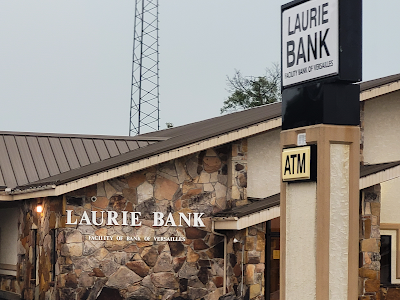
The market was the only building in the area to have a phone as well as the only place that had a drilled water well.  The Laurie family allowed a number of nearby families to tap into the well and folks in the area would come to the store to use the phone.  In 1961, area residents petitioned for a post office, choosing the name “Laurie” because of the goodwill shown by the family store over the years.  Laurie Missouri was incorporated at a city in June of 1966.  In 1970 the census reported a population of 106 and in 2020, a total of 939 residents were recorded.  FYI, my Laurie has ‘laid claim’ to the town’s bank since it’s ‘her town’.

After passing through Laurie, we continued north looking for more adventures and historic places…

Just click on any of the photos to enlarge them.

Thanks for stopping by for a visit!

Take Care, Big Daddy Dave

Tuesday, September 12, 2023

Road Trip – Missouri (Part 5)

…as the rain clouds moved in and the afternoon began to wane, we finally reached our objective just north of Mansfield Missouri.  We had arrived at the Bakersfield Pioneer Village and Baker’s Creek Seed Store…

The seed store, which is located in this building, was the key to everything for Laurie.  Having the pioneer village was just a plus factor to her thinking.  So we had plenty of time for her to shop in the store.


Packets of seeds lined much of the store’s wall space…and I can assure you that Laurie bought a variety of flower seeds…types that made sense for our yard, as well as for one of our new neighbor’s landscaping.  The display rack in the second photo was loaded with a variety of food items for those who do and who don't garden.

Jere Gettle founded the Baker Creek Heirloom Seed in 1998 as a hobby.  His original catalog included 70 varieties of seeds and were handed out to about 550 people.  Today the company distributes about 1,400,000 catalogs each year and they feature about 1,000 heirloom varieties.  Baker Creek is North America’s largest heirloom seed company...

While Laurie was shopping in the Seed Store, I was wandering around outside taking in the sights.  My first encounter was with “Fluffy”, or perhaps "Scruffy", a dusty gray ‘mouser’ who didn’t move when I came near, but who did give me the ‘evil eye’.

This great looking 1956 Chevrolet (Chevy) Belair was sitting right next to the seed store…and I don’t miss any opportunities to take photos of old and or classic cars. 

The Seed Store occupies the spot where the original homesteading family had planted their market garden.  Starting in 2007, the first portion of the current Pioneer Village was built.  In addition to the Seed Store, there is a farm-to-table vegan restaurant, a ‘speaker barn’, an old-time mercantile, an herbal apothecary, a natural bakery, a blacksmith shop, a western sheriff’s office and jail, a native rock oven, a windmill, seed warehouses and a variety of historic poultry and livestock breeds.

We arrived a bit late in the day, so the restaurant was closed.  The good news is that I didn’t have to choose something to eat from the vegan menu, although I did note a couple of items I’d try that didn’t included greens, which I can’t eat.


The gardens at Baker’s Creek were just outstanding!  Maintaining them as well as the village has to be a challenge and it has to employ quite a few people.  One extra bit of good news for visitors to the Pioneer Village is that there isn’t any admission charge!  It’s a ‘freebee’, at least for visitors who are just looking around…


This is the Apothecary, aka store and bakery.  Lots of opportunities to spend money in Pioneer Village!  We did buy a couple of molasses cookies to go…and they were amazing…

Here’s another photo of part of the Pioneer Village.  Baker Creek and the Pioneer Village began hosting festivals in 2000.  The idea was to bring together gardeners, homesteaders and natural foods enthusiasts so they could exchange ideas and seeds as well as enjoy vendor’s wares, old time music and more.  An annual tulip festival, spring planting festival and fall harvest festivals are hosted at the farm each year


Laurie and love the animals but by the time we finished looking around Pioneer Village, we were trying to dodge raindrops and cringing as thunder boomed all around us.  Both the fowl and that goat really wanted Laurie’s attention, or perhaps it was the grass she was passing to them…

Laurie took this nice photo looking out from Pioneer Village over the farm and its myriad gardens and greenhouses.  Pioneer Village in Mansfield Missouri is the company’s headquarters.  Trial gardens and the greenhouses are all part of the total.

Another public event that Baker Creek sponsors is the National Heirloom Exposition, which attracts more than 20,000 people every year.  In its 10th year, this event will be held at the beach in Ventura California.  FYI, Baker Creek also has a seed store in Petaluma California.

One last garden/flower photo taken at Baker Creek Heirloom Seed Company and Pioneer Village.

The company saves, grows and shares rare seeds.  Their objective is to help provide seeds of a sustainable food supply for everyone by keeping heirloom varieties alive for future generations.  Their concern is to preserve seed diversity and promote food security in a time when corporate agriculture develops hybridized seeds and patents them…narrowing diversity and putting our food supply at potential risk.

Baker Creek Heirloom Seed Company and Pioneer Village is open year around but hours do vary so check ahead.  They are located at 2278 Baker Creek Road near Mansfield Missouri.  Their website and on-line store can be found at Our Village | Baker Creek Heirloom Seeds (rareseeds.com).

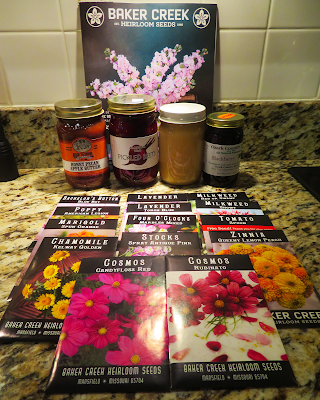
Once we finally returned home, Laurie laid out her selection of seeds for me to photograph.  She only purchased 2 types of Milkweed…of the 9 different varieties offered by Baker Creek.  Flowers, herbs, vegetables, fruits…the variety was endless so this group of 14 seed packets didn’t even cover the number of melon seeds…24 in total…that are offered on-line.  The number of seed choices on-line and in the store are mind-blowing!

Of course, you might have noticed that we’d made a couple other purchases too.  Honey Pecan Apple Butter, Honey Butter Spread, Pickled Beets and some Blackberry Jam. 

That’s all for now.  Just click on any of the photos to enlarge them…

Thanks for stopping by for a visit!

Take Care, Big Daddy Dave

Friday, September 8, 2023

Road Trip – Missouri (Part 4)

…continuing with our road trip ‘adventures’ through southern and north central Missouri, as we slowly made our way along back roads toward Omaha Nebraska and a family visit.

You can never completely judge a ‘book by its cover’.  Just because a small town doesn’t look very prosperous, doesn’t mean that there isn’t anything good for wandering tourists to discover.  Birch Tree Missouri is a town in Shannon County Missouri with a population of only 541 residents as per the 2020 census.  It was interesting to note that 6 more people lived in Birch Tree in 2020 than did back in 1890.  Most of these little lumber towns shrank...

There has been a post office here in Birch Tree since the 1860s.  The town was named for a grove of birch trees near the original town site.  Shannon County as a whole only has a population of a touch over 7,000.  The county was named after a member of the Lewis and Clark Expedition…George F. “Peg Leg” Shannon.


We had expected that we’d stop for lunch in Winona Missouri…but the restaurant we were looking for was no longer in business.  So we continued on to Birch Tree…and there we spotted Grandma Nell’s.  We were a little dubious given the parking lot but there were plenty of customers when we arrived at the end of ‘normal’ lunch hours.

By the time we took this photo though, only a few tables behind us were occupied.  The dining room was neat and clean…just about what we would expect in a small town restaurant.  Laurie did take note of that special on the chalk board…and I am glad she did!

Laurie ordered what is probably her favorite sandwich, (other than a good lobster roll), a patty melt on grilled marbled rye bread with French fries.  I don’t remember the price, but then again, nothing at Grandma Nell’s was very pricy.  That was a nice change from what we experience in most towns…

IN ANY CASE, Laurie said that this was the very best Patty Melt Sandwich she had EVER had! 

So back to that chalk board with the daily special… I was going to order a burger to be ‘safe’ but Laurie pointed out that the special was a Pork Tenderloin Sandwich with Fries…for only $7.00!  When it was served, I noted that it wasn’t a small sandwich by any means…and it was excellent! 

Service was great, the price was right and the food was very good indeed!  We would recommend Grandma Nell’s to anyone without hesitation… This restaurant is located at 9023 East 1st Street in Birch Tree Missouri.  Phone: 573-292-1117.  Grandma Nell’s is found on Facebook at Gramma Nell's | Birch Tree MO | Facebook.


The real reason we drove into Birch Tree was that I’d discovered that this little town still has an old St. Louis and San Francisco Railroad depot.  It is a small one and I’m not sure when it was built, but I think was before 1905 or 1908 at the latest.   How small is it?  The ticket office measures about 5’ x 8’.  The passenger waiting room is only 12’ x 15’ and the freight room measures 21’ x 23’. 

The caboose is called an extended-vision version.  The sides of the cupola project beyond the sides of the car body.  The expanded cupola allowed the crew to see past the top of the taller rail cars that began to appear after WWII and they also increase the roominess of the cupola area.

In this area of southern Missouri during the late 1800s and early 1900s, the money was all about timber.  Shannon County boasted 3 steam-powered mills and one water-powered mill, which combined produced 1,350,000 feet of lumber in 1880.   The Cordz-Fisher Lumber and Mining Company was based in Birch Tree.

I love this old photo which shows this little depot still in use back in 1951.  That's 'only' 72 years ago...

By the early 1900s, little choice pine timber remained near Grandin.  Missouri Lumber and Mining moved north.  This move was made even more tempting…and profitable…when the St. Louis and San Francisco Railway Company (Frisco) purchased the Kansas City, Springfield and Memphis Railroad in 1901.  Shannon County had been fairly isolated until that point and to sweeten the pot, the railroad offered MLM reduced rates to ship from the county.  By 1909, MLM had actually packed up the Grandin Mill and moved it to Shannon County.

Note: Missouri’s first copper mine was opened in Shannon County in 1846.  The state’s only manganese mine was opened as part of the war effort during WWII.

This interesting brick structure is the Administration Building at the Missouri State Fruit Experiment Station near Mountain Grove Missouri. Built in 1900, this Tudor Revival style building rests on a limestone block foundation.  With its corner tower and conical roof, plus those pediment style gables and scrolled brackets, it is a distinctive building.  It is scheduled to be refurbished...

The Missouri State Fruit Experiment Station is part of the William H. Darr College of Agriculture at Missouri State University.  This facility, which includes a number of newer structures, conducts plant science research programs and advisory programs in commercial fruit crops and public education. 

The railroads had encouraged farmers in Missouri to buy land along their rail lines for fruit raising.  Their main selling point was that the railroads could easily take crops to city and regional markets.  By 1890, Missouri was the largest fruit raising state in the United States.  The area around Mountain Grove was the center of this growth.  Orchards of 500 to 3,000 trees were common. 

At the time that the Missouri State Fruit Experiment Station was established by an act of the Missouri Legislature in 1899, and until 1913, it was the only experiment station in the United States devoted exclusively to fruit culture.  By the mid-1970s…before this building was listed in the National Register of Historic Places…the work done here had led to 10 new varieties of apples, 7 new peaches, 11 new plums, 12 new grapes, a new crabapple and 1 new type of raspberry.

This building is referred to as the Mountain Grove City Hall or the City Hall and Jail…although it no longer serves either purpose.  This 2-story flat-roofed building is clad with unfinished native field stone with beaded mortar joints…a technique referred to as “Ozark rock” or “giraffe rock” construction.  Its construction was built using the Great Depression’s Works Progress Administration funds using local labor.  The style is referred to as “WPA Moderne”.  

As the sign in front of the building states, this is now the home for The Mountain Grove Central Arts and History Council, an organization that promotes visual arts, music and literature.  See: The Mountain Grove Central Arts and History Council | Facebook.

Mountain Grove lies at 1,525 feet above sea level in the south-central part of Missouri and has had a post office since 1875.  It was named Mountain Grove due to its location on a ridge in a grove of trees.  The town has a population of 4,313.

History:

         ·         One famous incident in Mountain Grove was in the middle of May in 1883.  What was termed a “nipping frost” caused every tree, sapling and shrub to be damaged…looking like they’d been cut clean from an axe. 

         ·         Another incident occurred in Mountain Grove in May of 1897.  Twenty masked men were out looking for Elijah Mayfield.  He wasn’t at home so they tried to burn the house down.  Elijah’s father put the fire out.  Then the mob rode to another nearby home…and finding the home barricaded, they opened fire on the residence, killing two occupants. (Not Mayfield…who wasn’t there) Following an investigation and threats against witnesses, the jury (made up of intimidated local citizens), found that the two victims had been killed “at the hands of parties unknown”.  I couldn’t find out what ever happened to Elijah Mayfield...

In my next post, we will finally reach that critical stop on our backroads journey…the one needed to keep Laurie happy.  If I’d timed it badly, it wouldn’t have been a good thing!

Just click on any of the photos to enlarge them…

Thanks for stopping by for a visit!

Take Care, Big Daddy Dave

Tuesday, September 5, 2023

Road Trip – Missouri (Part 3)

…continuing with our exploration of part of southern and central Missouri while in route to visit our family in Omaha Nebraska.

Today we headed west across southern Missouri.

Jackson Missouri is just a bit northwest of Cape Girardeau and Jackson is the Cape Girardeau County seat.  Jackson was the first city in the United States to be named in honor of President Andrew Jackson.  The county was first organized in October of 1812.  It was one of the five original counties in the Missouri Territory after the USA completed the Louisiana Purchase in 1803.  As of the 2020 census, the county recorded 81,710 residents.

At first, everyone assumed that the town of Cape Girardeau would be named as the county seat for Cape Girardeau County.  Fortunately for the town of Jackson, questions arose of the legitimacy of the title for the land donated for the construction of the courthouse in Cape Girardeau.  So, the county commissions chose Jackson as the county seat.

The first courthouse was built in 1818 but it was closed and moved in order to build a new courthouse in 1837.  That structure burned down and a new courthouse was built in 1872.  In turn, that building was torn down so a “new” courthouse could be built.  The current courthouse was completed in 1908…and it marks its 115th anniversary this year.


I wasn’t expecting any railway related encounters on this road trip.  I guess that my pre-trip research failed me…but luck popped up anyway.  It turns out that Jackson Missouri is the home of the St. Louis, Iron Mountain and Southern Railway…and tourist excursion line with about 6 miles of track.

The original St. Louis, Iron Mountain and Southern Railway operated from 1874 until 1917 when it was merged into the Missouri Pacific Railroad.  Its primary reason for being was to deliver iron ore from Iron Mountain Missouri to St. Louis.  The original rail line was robbed twice, once by the James-Younger Gang in 1874 and one other time on November of 1903.

That big diesel locomotive is a 2,250 horsepower EMD E8, a passenger-train locomotive built by General Motors’ Electro-Motive Division in La Grange Illinois.  450 of these locomotives were built between 1949 and early 1954.

That #1345 passenger car is a former Illinois Central commuter car that dates back to 1926.  You can see some locomotive drive wheels and a piece of railroad history in front of the coal tender in the third photo.  It is part of old steam locomotive #5, a 2-4-2T “Columbian” that was purchased from the Crab Orchard and Egyptian Railroad in 1986.  Old #5, a small industrial style locomotive, was built by H.K. Porter Inc. in Pittsburgh PA.  She pulled freight and made money for Crab Orchard through 1977 but a larger locomotive made #5 obsolete for most functions.  She pulled tourist trains for St. Louis and Iron Mountain Railway until 1999.  The volunteer staff at St. Louis RR hopes to get her rebuilt and back in service.

The St. Louis and Iron Mountain Scenic Railroad is totally operated by volunteers.  The railroad specialized in themed rail adventures.  They include a Chocolate Express, Halloween Express, Christmas Express, Murder Mystery Dinner and more.  To view their schedule and learn more, go to St. Louis Iron Mountain Railway | Train Jackson | Missouri (slimrr.com).

I took this photo on a whim…since I just liked the way it looked.  This 3-bay brick commercial corner structure at 131 West Main Street, with its Victorian detailing, was completed ca. 1896.  One of the best known buildings in town, the former C.H. Wolter Buggy and Harness Shop provided leather equipment, harnesses, saddles and buggies for local farmers and other citizens.  Mr. Wolter would assemble the buggies in the basement and then move them to the main floor of the store using a large pulley elevator.  The buggies sold for $40 to $60 each. 

Several businesses have occupied this building in recent years.  I saw that an electronic gaming business operated here until fairly recently.  The latest occupant is After Class Academy, an operation that provides STEM or STEAM education and extracurricular training for local students.  See After Class Academy – online and in person educational options.


This is the Frizel-Welling home.  It’s the second oldest home in Jackson Missouri.  Built in at least 2 significant stages, the Cape Code style west wing of the home was completed in 1818 while the east wing was constructed in 1838 in the Greek Revival Style.  Not to confuse the reader, but the Frizel’s sold the home in 1820, and 2 other owners purchased the home before it was purchased by Charles Welling in 1838.  He completed the ownership ‘circle’ by buying the house for him and his new bride, Elizabeth Frizel, the daughter of the original owners.  The descendants of the Frizels and Wellings continued to own the home for 9 generations!

The family proved more than accommodating for the community over the years.  The First Presbyterian Church was organized in the parlor.  For a time, the parlor also served as the town’s first library.  This home was also the local Masonic Lodge’s first meeting place.  Many family artifacts were left with the home and, in 2015, it was purchased by the community in order to preserve a significant local landmark and a time-capsule of sorts of the history of Jackson Missouri.

As the sign in the first picture indicates, the home is currently being restored in preparation for its future role as a community museum.  The second photo gives us an idea of what the home looks like… It was raining and those bushes and trees blocked our view when taking a photo.  It’s always a bit reassuring to see a community work together to preserve old homes and other structures…retaining a sense of what came before...

This is the Bennett-Tobler-Pace-Oliver House, commonly and more easily referred to as the Oliver House.  This historic two-story Greek Revival Style home in Jackson Missouri was built in 1848.  In the rear of the home, there is a one-story addition and a two story service wing.  This home was where Missouri State Senator Robert Oliver and his wife, Marie Oliver, once resided.   Marie Watkins Oliver is known as “the Betsy Ross of Missouri”.  She designed and created the Missouri State Flag.  It features 3 stripes, red, white and blue from the top down and the official state seal has a place of prominence in the center of the flag.

The Oliver House is operated by the Jackson Heritage Association and the home is open for tours on the weekends.  For a virtual tour of this home, just go to The Oliver House- Jackson MO - YouTube.

As we rolled along the back roads through the countryside in Southern Missouri, there were several occasions where we spotted ponds and small lakes sporting beautiful white water lilies in full bloom.  It’s a sight that we hadn’t seen in several years.  These are common North American white water lilies…aka ‘pond lilies’.  Hopefully, photos I took a bit later in the trip will be clearer than this one…

Water lilies belong to a family of flowering plants that live in aquatic environments in both temperate and tropical climates around the world.  There are about 70 known species.  They are referred to as rhizomatous aquatic herbs…as they are rooted in soil within bodies of water, with their leaves and flowers floating on or emergent from the surface.  These plants provide food for fish and wildlife, but they can cause drainage issues due to their rapid growth.  Water Lilies are the national flower for Iran, Bangladesh and Sri Lanka.


When we headed south on MO Hwy 51, I was a little bummed out because I’d hoped to visit the Mingo National Wildlife Refuge near Puxico Missouri, but I realized that the timing wasn’t right.  There was an attraction specifically for Laurie that I had to ensure we had time to explore.  Nevertheless, I got lucky when we spotted this old depot in Puxico.

Now designated at the Berry-Glenn Historical Museum, this old depot was built in 1902 on the Hoxie Branch of the Frisco Railroad.  Back in the day, this depot in Puxico was a major stop on the line as it was built through the swamps from Cape Girardeau southward.  Back in the early days, the arrival of a rail line was a reason for many towns to be founded.

The Berry-Glenn Historical Museum is home to many artifacts and day to day objects that people in the area used in their everyday lives.  Items include historical photos, school memorabilia, antique farm tools, children’s toys and more.  Special event are also held here throughout the year.  The museum is open Saturdays and Sundays.

Puxico has a population of about 873…interesting because it had spiked to 1,145 (+40%) from 1990 to 2000 and had dropped to 881 by 2010 (-23%).  There has to be a story there…  The town was settled in 1883 and it was named after a friendly Indian chief in the area, named ‘Pucksicah’.  Thanks to the railroad and uncut forests nearby, by 1912 the town had 814 residents, a bank, a newspaper, 3 churches, 4 general stores, a flour mill, a canning factory and an opera house.


We wandered off route to visit the next place I’d found and researched prior to the trip.  The 2 buildings I photographed seemed to be fairly representative of what’s left of Grandin Missouri.  This community was originally a company town founded and built by the Missouri Lumber and Mining Company.  It was named after a company founder, E.B. Grandin.  Today the town…or what’s left of it…has a population of 226, a far cry from its reported population of between 2,500 and 3,000 around 1900.  Despite the decline, the town is home to a number of businesses as well as a post office.

A total of 30 buildings in Grandin, plus the original mill pond, are listed on the National Register of Historic Places.  However, that listing doesn’t include photos or addresses…only descriptions of the buildings, which were impossible to interpret by yours truly.  Given the center chimney on the larger building, it is old enough to be on the list…and that rustic and deserted “duplex” certainly fits the expected image. 


As you can see from the 2 photos/images above, the town was once very prosperous and the mill operation was indeed huge… The mill pond could hold 500,000 feet of logs waiting to be milled.  A 6 mile long logging railroad was built and a locomotive was brought in via ox-teams for the last 22 miles of its journey.  The entire effort was ‘unprecedented and the result was a huge complex of mills and kilns.

Grandin was the company headquarters for about 20 years.  It was planned by a company architect/engineer.  The main street had the company store, a hospital, hotel and other commercial buildings…all surrounded by large lawns and decorative landscaping.  The building shown above was the Company office and the Bank of Grandin.  Nearby streets were designed to accommodate up to 1,000 houses.  Just outside town there was a railway roundhouse and machine shops.  There also was an 80 acre lumberyard.

How much timber was harvested?  When the railroad reached the town in June of 1888, 6 million board feet was waiting to be shipped.  Production reached 32 million board feet in 1892 and averaged 60 million annually after 1895.  When the timber in the area was exhausted/cleared, the Missouri Lumber and Mining Company abandoned the town...

That’s all for now.  Just click on any of the photos to enlarge them.

Thanks for stopping by for a visit!

Take Care, Big Daddy Dave